 FlavorAtlas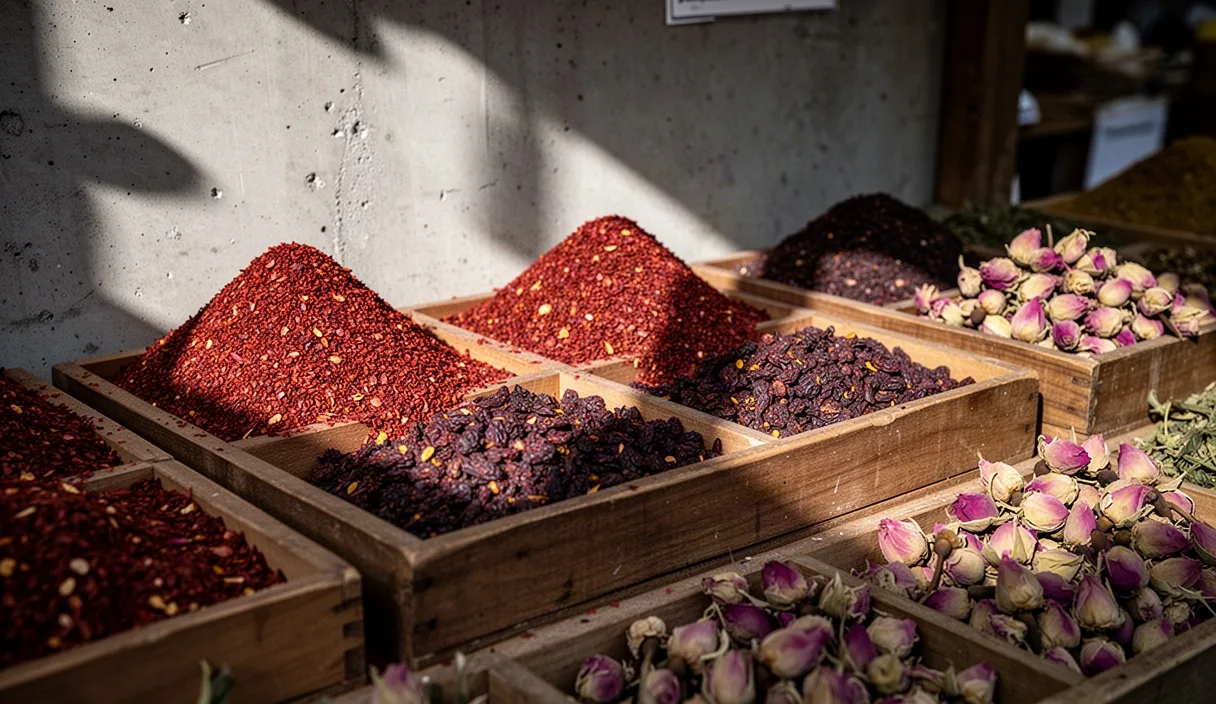
Skip the front entrance displays. Istanbul's Spice Bazaar, known locally as Misir Carsisi, sits at the edge of Eminonu near the Galata Bridge. Built in 1664 as part of the New Mosque complex, its L-shaped stone interior houses roughly 85 official stalls. While the architecture is historic, the open-air displays facing the central corridor are designed for casual foot traffic. Spices piled in tall cones sit exposed under hot halogen lights for weeks, absorbing moisture, diesel exhaust from nearby ferry terminals, and dust. Buying high-grade spices here requires bypassing theatrical displays and looking directly at inventory turnover, storage conditions, and origin labels.
Sellers rely on fast transactions with visitors who lack baseline price knowledge and sensory training. They hand out candied nuts, pour cups of apple tea, and quote numbers in foreign currencies to obscure actual market value. A focused buyer should target specific regional staples: Urfa isot, Maras red pepper, hand-collected sumac, wild thyme, and unadulterated saffron. Securing real agricultural products at fair rates comes down to corridor selection, physical testing, and understanding wholesale benchmarks.
Corridor navigation and shop selection
The interior of the covered market consists of two main intersecting halls: a long north-south axis and a shorter western branch. Rent rates inside these stone vaults are among the highest commercial retail costs in the city. To cover overhead, inner-hall shops routinely inflate rates by three to five times over street prices and push pre-packaged gift sets loaded with cheap fillers like ground coriander, salt, and stale paprika. If you shop exclusively inside the central arcade, expect to pay a heavy convenience surcharge.
The best purchasing zone is the exterior western alleyway running along Hasircilar Caddesi and Tahmis Sokak. This outer market serves local restaurateurs, home cooks, and neighborhood grocers. Stock here moves quickly, meaning spices on offer were milled or harvested weeks ago rather than months ago. The shops on Hasircilar Caddesi sell coffee, cheese, curing spices, and dried goods out of deep sacks rather than static display pyramids. The air smells intensely of roasted beans from Kurukahveci Mehmet Efendi and cured pastirma, which indicates actual food commerce rather than tourist staging.
When selecting a merchant inside or outside the covered building, look for three physical signs:
- Storage containers: Avoid merchants displaying their primary sale inventory in unshielded wooden troughs or loose cardboard cones. Prioritize vendors who keep their working stock in airtight glass jars, dark bins, or heavy food-grade plastic drums stored away from direct light.
- Customer demographic: Look for Turkish grandmothers, domestic shoppers buying bulk staples in plain paper bags, or working cooks. If a stall only contains tour groups sipping tea from gilded glasses, keep walking.
- Label specificity: Reliable vendors label regional origins clearly. You should see Sanliurfa or Kahramanmaras on the pepper tags, Gaziantep on the sumac, and Isparta on dried rose products, rather than generic signs reading "Special Turkish Pepper" or "Ottoman Spice."
Visual indicators for fresh Urfa and Maras chiles
Urfa biber (also called Isot) and Maras biber are sun-cured, oil-rich flaked peppers indigenous to southeastern Turkey. Both peppers go through a sweating process: farmers pick the chiles, dry them on flat rooftops under the sun by day, and pack them tightly in fabric sacks or tarps by night. The trapped humidity ferments and support the flesh, locking in moisture and oils. Industrial producers cut corners by drying peppers on concrete floors with artificial heat and adding low-grade palm oil or red chemical dyes to mimic the sweaty sheen.
Fresh Urfa pepper should be dark burgundy to near-black, resembling the skin of a dried raisin. It should carry an unmistakable scent of dark chocolate, cured tobacco, and dried fruit, with a slow, building heat rather than an immediate chemical sting. Fresh Maras pepper is vibrant brick-red, slightly coarser in grind, with a balance of fruity acidity, mild heat, and salt. Both varieties should feel distinctly soft and pliable to the touch.
| Quality Indicator | Fresh Urfa (Isot) | Fresh Maras Biber | Adulterated or Stale Stock |
|---|---|---|---|
| Color | Dark purple-black with an oily, deep glow | Warm, deep brick-red with natural sheen | Dull brown, pale orange, or unnaturally neon red |
| Texture | Soft, supple, clumps lightly when pinched | Oily, flaked, slightly moist between fingers | Bone-dry, dusty, or sticky with greasy oil residue |
| Aroma | Tobacco, dark raisin, light smoke | Bright, citrus-forward, earthy roasted pepper | Rancid cooking oil, musty cardboard, or zero smell |
| Paper Test | Leaves faint amber-purple oil ring on white paper | Leaves a light orange-red oily halo on paper | Leaves bright red dye rings or no oil at all |
Perform the pinch test before agreeing to a weight. Take a pinch of the pepper flakes from the vendor's tasting jar and compress it firmly between your thumb and forefinger. When you release your fingers, the flakes should stick together in a small clump for two seconds before falling apart. If the pepper shatters into powdery dust, it is old and desiccated. If it leaves your fingers coated in a heavy, odorless grease that smells like stale frying oil, the seller has added vegetable oil to revive dead inventory.
True saffron inspection checklist
Saffron fraud is the most widespread scam in the Spice Bazaar. More than eighty percent of stalls sell safflower (Carthamus tinctorius), labeled locally as Aspir or marketed dishonestly as "Turkish Saffron." Safflower consists of coarse, shredded orange-yellow thistle petals. It adds mild yellow color to rice broth, but it has zero culinary saffron flavor, aroma, or value. Real saffron is the dried stigma of Crocus sativus, imported from Iran or grown in tiny quantities around the northern Turkish town of Safranbolu.
True saffron is expensive because each flower produces only three delicate stigmas, harvested entirely by hand at dawn. If a vendor offers you a glass jar of saffron for 60 or 80 lira per gram, you are looking at safflower, corn silk dyed with chemical yellow food coloring, or lotus stamen. Run through this step-by-step checklist before buying any quantity:
- Inspect the thread shape: Real saffron stigmas are distinct trumpet-shaped filaments. They are slender at the base and widen into a fluted, serrated crest at the tip. Safflower threads look like jagged, shredded wood fibers or dried flower petals of uniform thickness.
- Examine thread color: High-grade saffron (Sargol or Negin grade) is deep, uniform crimson throughout. Avoid threads that have a large amount of pale yellow style attached to the bottom; vendors leave the style attached to artificially increase scale weight.
- Smell the closed jar: The aroma of genuine saffron is medicinal, sweet, and pungent, evocative of sweet hay, warm earth, and honey. It should never smell like tea leaves, plastic, or plain dried weeds.
- Demand the warm water test: Ask the vendor to drop two threads into a small glass of warm water. Genuine saffron slowly tints the water a luminous golden-yellow over five to ten minutes. The thread itself retains its crimson red color. If the water turns deep red or pink instantly, synthetic dyes are washing off. If the thread bleaches white within three minutes, it is dyed corn silk.
- Taste the tip: Place one thread on your tongue. Genuine saffron tastes slightly bitter and astringent. If the thread tastes sweet, the vendor has soaked it in honey, sugar water, or glycerin to add physical weight to the scale.
Price per kilo benchmarks in lira
Prices in the market shift due to local inflation, but baseline wholesale-to-retail ratios remain relatively consistent. Merchants frequently quote prices per 100 grams without making the unit clear, leading visitors to think a purchase costs 90 lira when the final tally is 900 lira on the credit card slip. Always ask for the price per kilogram (kilo fiyati) before the merchant places a scoop into a bag.
Use the following figures as operational benchmarks when shopping Hasircilar Caddesi and interior stalls. Prices significantly below these ranges indicate cut or stale products, while prices more than double these rates represent inflated retail margins.
| Spice Variety | Expected Price (TL per kg) | Notes on Grades and Cuts |
|---|---|---|
| Urfa Isot (Grade A) | 450 - 750 | Should have dark purple luster and pliable texture. |
| Maras Biber (Grade A) | 400 - 700 | Medium flake, distinct brick-red tone, slightly salted. |
| Pure Sumac (Coarse) | 350 - 550 | Dark burgundy berries; avoid fine pink powders mixed with salt. |
| Wild Mountain Thyme (Zahter) | 320 - 480 | Whole dried leaves and small bud clusters, pungent scent. |
| Pure Orchid Root (Salep) | 6,500 - 10,500 | Pure ground tuber powder; avoid cheap instant mixes cut with cornstarch. |
| True Saffron (Iranian Negin) | 120,000 - 220,000 | Equates to 120 - 220 TL per gram. Sold in 1g to 5g containers. |
| Cumin (Yerli Kimyon) | 280 - 420 | Intense aroma; ground seed loses aromatic punch within weeks. |
When you place an order, monitor the digital scale face. Turkish electronic scales show weight in kilograms, unit price per kilogram, and total due. Verify that the display starts at 0.000 before the merchant sets down the container. Transparent heavy-duty bags add negligible weight, but decorative wooden boxes, clay jars, or ceramic dishes add 150 to 400 grams to the scale reading. Pay only for net spice weight.
Vacuum packing and airport transport tips
Every commercial stall in the market operates an electric vacuum-sealing machine (vakum makinasi). Once you select your items, instruct the merchant to vacuum pack them by saying "Lutfen vakumlayin". Proper sealing protects the spices from ambient moisture, prevents aromatic oils from evaporating, and eliminates strong odors that can trigger questions during transit.
Follow these specific sealing requirements for customs and transit safety:
- Demand double seals for oily peppers: The natural oils in fresh Urfa and Maras chiles slowly degrade thin plastic under vacuum pressure. Ask the clerk for a heavy-gauge bag and request a double heat seal on the lip. If the bag starts weeping oil along the seam within thirty minutes, return it for repackaging.
- Keep spices in original, labeled bags: Airport customs agents are trained to flag unidentifiable organic powders. Ensure the seller affixes an adhesive shop label or writes the contents clearly in ink (for example, "Isot Biber / Turkish Pepper") on the outer sleeve.
- Observe volume limits for carry-on luggage: Aviation authorities in many countries limit non-essential powders in carry-on bags to 350 milliliters or 12 ounces (roughly the size of a standard soda can). Larger quantities of dense powders like sumac, ground cumin, and chile flakes trigger automated secondary manual inspections at Istanbul Airport (IST) and Sabiha Gokcen (SAW). Pack bulk purchases in your checked luggage to prevent delays at security gates.
- Wipe outer bags before packing: Spices like paprika, sumac, and fine chiles leave a dusting of trace particulate on the outside of vacuum bags. Use an alcohol wipe or moist paper towel to clean the sealed plastics before tucking them among clothing, as residual spice dust can permanently discolor fabric.
Common mistakes
Buying under social pressure remains the primary financial mistake visitors make. Accepting a glass of hot tea from a vendor creates an artificial sense of obligation, leading buyers to agree to unverified weights and vague pricing. Take the tea if you wish, but treat it as hospitality, not an implied contract to purchase low-grade inventory.
Another frequent error is purchasing multi-spice blends marketed under titles like "Ottoman Secret," "Kebab Seasoning," or "Turkish Curry." These mixtures consist largely of bulk table salt, cheap ground turmeric, yellow food dye, dried onion dust, and low-grade flour. Purchase whole or pure, single-origin flaked spices instead. You can combine your own sumac, cumin, and thyme at home using your own pantry proportions without paying spice prices for table salt.
Finally, avoid tourist-grade wooden souvenir chests pre-filled with assorted spices. These boxes are assembled weeks in advance and sit on exterior market displays exposed to humidity, sunlight, and handling. The spices inside lose their essential volatile oils, leaving you with sawdust-flavored powders sealed under brittle cellophane.
Next steps before visiting the bazaar
Prepare your gear before heading to Eminonu. Pack a durable canvas tote bag, a pack of wet wipes to clean your fingers during testing, and a working pen to note pricing across vendors. Withdraw local currency from a bank-attached ATM outside the market perimeter. While most established stalls accept international debit and credit cards, cash yields leverage when negotiating prices for bulk purchases of two kilograms or more.
When you arrive, walk the exterior perimeter of Hasircilar Caddesi first to anchor your price baseline before setting foot inside the covered stone halls. Sample the chiles using the pinch test, ask for the price per kilogram in Turkish Lira, and decline pre-blended novelty mixtures. If a deal feels rushed, or if a vendor refuses to perform a water check on saffron threads, step away immediately. A dozens-strong row of competing merchants is operating just a few meters down the stone corridor.